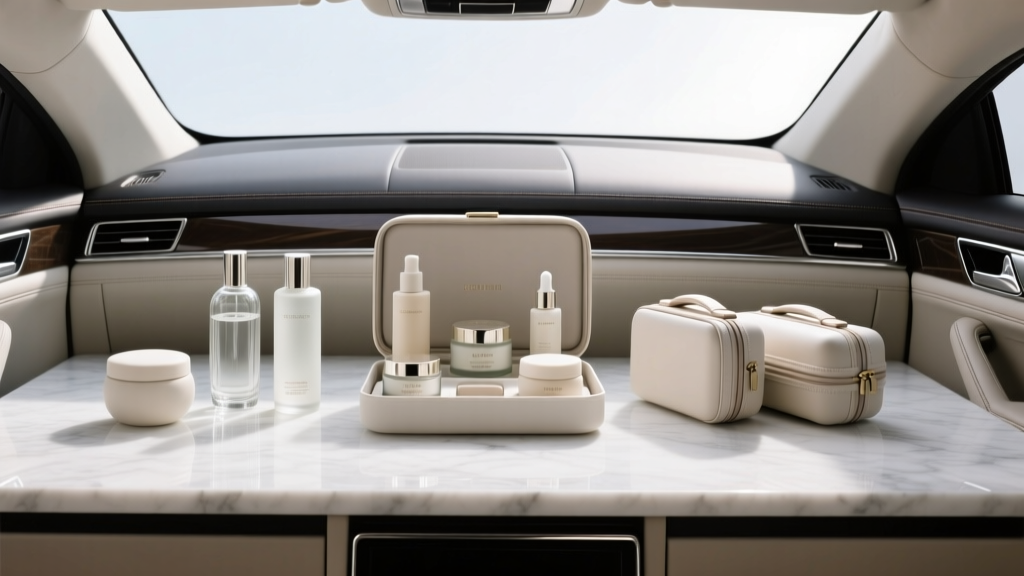
Skincare Kit Storage for Car Interiors (2026)
Your car interior does more than carry people and groceries. For a lot of owners, it?s also a daily staging area: commuting, school drop-offs, gym runs, road trips, and quick stops where you?re refreshing sunscreen, hand cream, lip balm, or contact solution at red lights and parking lots. The problem is that skincare products aren?t designed for the temperature swings, vibration, and UV exposure inside a vehicle?so the ?kit? you keep in your door pocket can turn into a leaky, sticky mess fast.
A professional-grade skincare kit storage setup in your car isn?t about vanity. It?s about keeping essentials hygienic, preventing spills that stain upholstery, and making sure you can actually find what you need without digging through a center console. Done right, it also protects products from heat damage, keeps your interior looking clean, and saves you money by reducing waste from ruined items.
This guide walks you through a smart, car-friendly upgrade: how to choose the right organizer, what materials matter, where to mount it, and how to pack it so it stays tidy in real driving conditions.
What ?Professional? Skincare Storage Means in a Car
In a bathroom or spa, ?professional? storage usually means sanitation, organization, and quick access. In a car, it also means temperature management, spill control, and secure mounting. Your goal is a kit that:
- Contains leaks (so one loose cap doesn?t ruin your carpet or leather)
- Prevents product breakdown from heat/UV (common with sunscreens, vitamin C serums, and retinoids)
- Stays quiet (no rattling bottles over bumps)
- Is easy to clean (wipeable liner, removable pouch)
- Looks intentional (fits your interior aesthetic instead of appearing cluttered)
Know Your Enemies: Heat, UV, Spills, and Vibration
Heat and product stability
A parked car can reach extreme temperatures quickly. Many skincare items separate, lose effectiveness, or become irritating after repeated heat cycles. Common culprits:
- Sunscreen (separation reduces even protection)
- Vitamin C serums (oxidize faster with heat and light)
- Retinoids (degrade with heat/UV)
- Gel moisturizers (can change texture and leak)
UV exposure
Sunlight through glass still triggers degradation, especially for products in clear or translucent packaging. Keeping items in an opaque pouch makes a noticeable difference.
Spills and stains
One leaky oil, micellar water, or hand sanitizer can:
- Leave glossy patches on plastics
- Stain light upholstery
- Cause lingering odors
- Attract dust that turns into grimy buildup
Vibration and ?cap creep?
Daily vibration can loosen caps over time?especially on travel bottles and flip-top lids. That?s why professional storage includes secondary containment (pouches, bins, and liners), not just ?a place to put things.?
Step-by-Step: Upgrade Your Skincare Kit Storage
Step 1: Decide what actually belongs in the car
Start by splitting items into two categories: car-safe essentials and leave-at-home actives. A tight kit is easier to keep clean and prevents product waste.
Car-friendly essentials (recommended):
- Hand cream (preferably in a tube)
- Lip balm (stick format beats pots)
- Mineral sunscreen stick (more stable than many lotions)
- Travel pack of face wipes or blotting sheets
- Mini fragrance-free moisturizer (small tube)
- Bandages + small antiseptic wipes (bonus: doubles as first-aid)
Avoid leaving these in the car long-term:
- Retinoids, prescription creams
- Vitamin C serums in dropper bottles
- Anything in glass packaging (break risk)
- Aerosols that may expand/leak in heat
Real-world example: If you commute daily and reapply SPF, keep a sunscreen stick in the car for touch-ups. Keep your ?primary? facial SPF at home where it stays stable and clean.
Step 2: Choose the right storage location
Where you store your skincare kit matters as much as what you store. The best spots balance accessibility with temperature control and safety.
- Glove box: Often cooler and out of sunlight, but space is limited and can get messy.
- Center console: Convenient and secure; choose a bin insert to prevent tipping.
- Seat-back organizer: Great for families/road trips; use pouches with zippers to stop items launching forward during braking.
- Door pocket: Easy access, but higher spill risk and frequent tipping?only recommended with a sealed pouch.
Safety note: Avoid storing hard items where they can become projectiles (loose bottles on seats, footwells, or dashboards). A tidy interior is also a safer interior.
Step 3: Pick an organizer built for car interiors
When shopping, prioritize materials and features that match automotive conditions:
- Wipeable interior lining (TPU, coated nylon, or silicone)
- Leak-resistant seams (heat-sealed or taped seams are a plus)
- Structured sides so it doesn?t collapse and spill contents
- Quiet padding to reduce rattles
- Secure attachment (Velcro straps, headrest loops, or console fit)
- Opaque fabric for light protection
Step 4: Add secondary containment (your spill insurance)
Even the best organizer benefits from a ?kit inside a kit.? Use a small sealed pouch for liquids and anything that could melt.
Quick packing rule: If it can leak, it goes in a zip pouch. If it can melt, it goes in the coolest spot you have (usually glove box or console).
Step 5: Pack it like a pro (so it stays organized)
Use zones so your hands find items without searching:
- Top-access zone: Lip balm, hand cream, sunscreen stick
- Clean-up zone: Wipes, tissues, small microfiber towel
- Liquid zone (sealed pouch): Sanitizer, micellar travel bottle, contact solution (if needed)
- Emergency zone: Bandages, antiseptic wipes
Pro tip: Store tubes and sticks vertically in elastic loops when possible. It reduces cap stress and keeps labels visible.
Step 6: Temperature-proof the setup (within reason)
You can?t refrigerate your interior, but you can reduce heat damage:
- Use opaque pouches to reduce light exposure
- Keep the kit out of direct sun (not on the dash, not in open cup holders)
- Rotate products seasonally (summer kit vs. winter kit)
- In extreme heat: bring sensitive items inside (especially actives and liquid sunscreen)
Recommended Storage Setups (Practical Comparisons)
Option A: Center console bin insert + sealed pouch (best for daily drivers)
- Pros: Clean look, easy reach, stable during driving
- Cons: Limited capacity
- Ideal for: 5?8 core items and a minimalist routine
Option B: Glove box hard case + microfiber wrap (best for heat/light control)
- Pros: Hidden, less sun exposure, reduces clutter
- Cons: Less convenient while on the go; can get overstuffed
- Ideal for: People who only access products when parked
Option C: Seat-back organizer with zip pouches (best for families and road trips)
- Pros: High capacity, easy sorting, doubles as general interior storage
- Cons: Can look busy if overloaded; requires consistent maintenance
- Ideal for: Multi-passenger vehicles, long trips, shared essentials
Option D: Cup-holder caddy (only for non-liquids)
- Pros: Fastest access
- Cons: Heat exposure, spill risk, can interfere with drinks
- Ideal for: Lip balm, sunscreen stick?no oils, no micellar water
Common Mistakes to Avoid
- Keeping glass bottles in the cabin: They can break during sudden stops or temperature shifts.
- Storing lotions upright without a pouch: Caps loosen over time; always use secondary containment.
- Overpacking ?just in case? items: More items = more mess and higher spill odds. Keep it curated.
- Leaving high-heat-sensitive skincare in the car year-round: Sunscreen and actives should be rotated and inspected.
- Using fuzzy fabric pouches: They soak up leaks and are hard to sanitize. Choose wipeable materials.
- Ignoring odor transfer: Strong fragrance creams can make your cabin smell off. Consider fragrance-free for car kits.
Maintenance: Keep Your Kit Clean and Your Interior Protected
Professional storage isn?t a one-time install. A 3-minute monthly reset keeps it looking new and prevents stains.
Monthly 5-step reset
- Remove the kit and shake out crumbs/debris.
- Wipe the organizer and pouches with a damp microfiber towel.
- Check caps and replace any cracked travel containers.
- Discard anything separated, discolored, or with a changed smell/texture.
- Restock only what you used?don?t add more ?extras.?
Interior-saving tip: If a leak happens, blot first (don?t rub), then clean with an interior-safe cleaner based on your surface: leather, vinyl, plastic, or fabric. A quick response prevents permanent staining and shine spots.
Build a Smart ?Car Skincare Kit? Checklist
If you want a ready-to-pack baseline kit, start here and customize:
- SPF: Mineral sunscreen stick
- Hands: Non-greasy hand cream tube
- Lips: Balm stick
- Clean-up: Unscented wipes or micellar wipes
- Backup: Small pack tissues + blotting sheets
- Mini towel: Thin microfiber cloth (also good for quick interior touch-ups)
- Optional: Travel-size sanitizer in sealed pouch
FAQ
Can I keep sunscreen in the car?
You can, but choose wisely. A mineral sunscreen stick tends to handle heat better than many liquid lotions. In hot climates, inspect it regularly for separation, leaking, or odor changes, and replace more often. If your car sits in direct sun all day, consider bringing sunscreen inside and keeping only a backup in the vehicle.
What?s the best place to store skincare in a car?
The center console is usually the best balance of access and stability. The glove box can be better for light protection. Avoid the dashboard and open cup holders for anything that can melt or leak.
How do I prevent bottles from rattling?
Use a structured organizer with elastic loops or add a small foam divider. Keeping liquids in a zip pouch also reduces noise and prevents caps from loosening due to vibration.
What materials should I look for in an organizer?
Go for coated nylon, TPU-lined fabric, silicone, or EVA?anything wipeable and resistant to absorbing oils. Avoid unlined canvas or fuzzy fabrics that trap residue and odors.
How often should I replace items in my car skincare kit?
Check monthly and replace as needed. Heat and daily temperature swings can shorten product life. If you notice separation, discoloration, grainy texture, or a weird smell, it?s time to toss it.
Will skincare products damage leather seats or trim?
They can. Oils and lotions may darken leather, create shiny spots on matte plastics, and attract dust. The best defense is sealed storage plus quick cleanup?keep a microfiber towel in your kit for immediate blotting.
Next Steps: Upgrade Your Storage This Weekend
Start simple: pick a storage location (console or glove box), buy one wipeable organizer and one sealed pouch, then build a tight essentials-only kit. After a week of driving, adjust based on what you actually use?your ?professional? setup should match your routine, not a fantasy checklist.
For more practical interior organization ideas, cleaning tips, and smart accessory guides, explore more articles on carinteriormix.com.